
SBP Governor Calls on Banks to Prioritise Deposits and Private-Sector Financing as Pakistan Enters Its Next Growth Phase
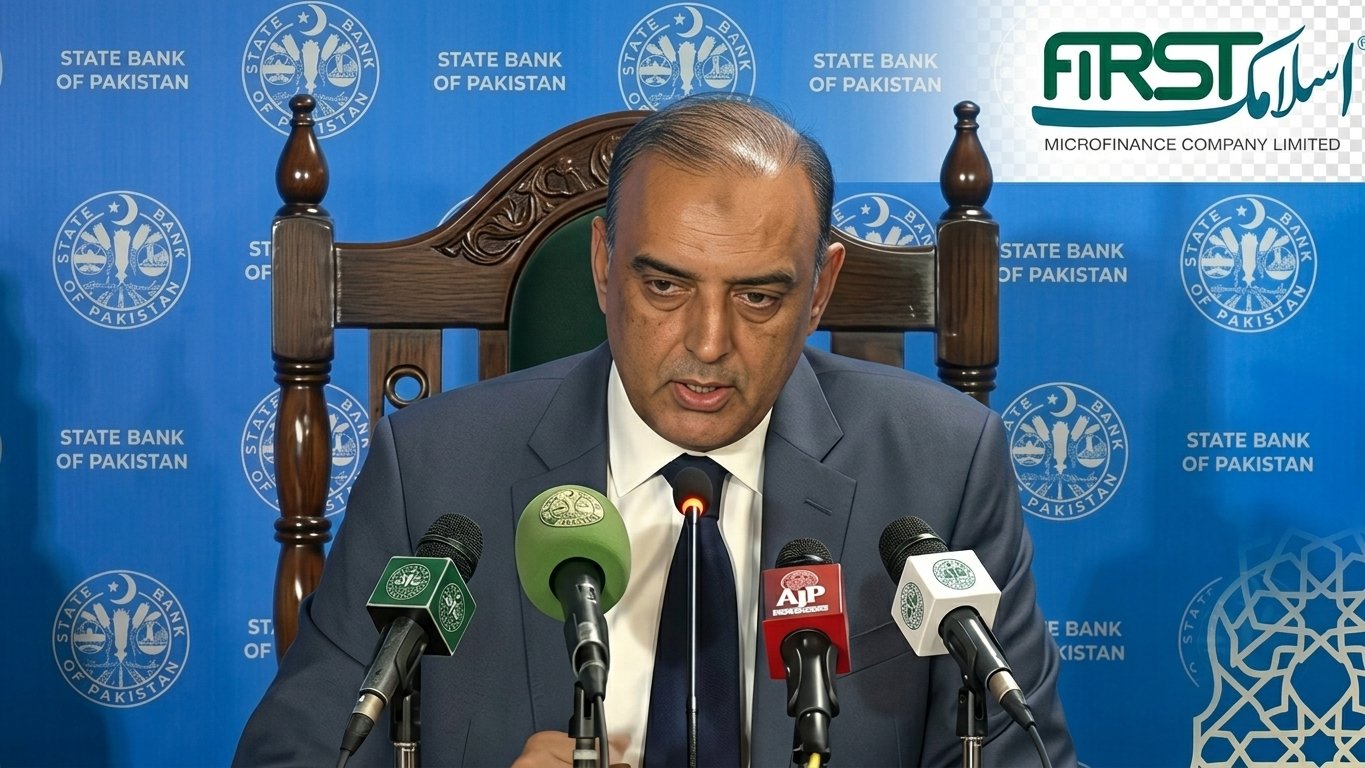
Speaking at the 11th Pakistan Banking Awards 2026 in Karachi, State Bank of Pakistan Governor Jameel Ahmed told the country's banking industry that economic stabilisation, while a genuine achievement, is only the first step. The real test now, he said, is whether banks can reorient themselves toward deeper deposit mobilisation and stronger financing for the private sector — the two pillars he believes will determine whether Pakistan's recovery turns into sustained growth.
For institutions like FIMCL that operate at the intersection of financial inclusion and Shariah-compliant financing, the Governor's remarks read less like a policy speech and more like a validation of the direction the sector already needs to move in.
A Resilient Economy — But Stabilisation Isn't the Finish Line
According to the Governor, Pakistan's economy held up better than many expected through FY26, a year marked by severe flooding, regional geopolitical tension, and an unpredictable global trade backdrop. Inflation stayed close to the medium-term target, expectations remained broadly stable, and the current account deficit came in near the lower end of projections — all signs, he suggested, that the difficult early work of stabilisation has largely paid off.
Foreign exchange reserves told a similarly encouraging story, comfortably clearing the end-June target of USD 18 billion. What mattered more than the headline number, he noted, was the composition behind it: the increase came primarily from SBP's own foreign currency purchases rather than fresh borrowing — a distinction that speaks to the underlying quality of the reserve build-up, not just its size.
Even so, the Governor was clear that stability is a foundation, not a destination. Getting the economy to stand still on solid ground, he argued, does not automatically translate into the kind of high, sustained growth Pakistan now needs — and that's where the banking sector's next chapter begins.
Where Pakistan's Banking Sector Stands Today
By the numbers, the industry looks healthy. Total banking-sector assets had climbed to roughly Rs69 trillion by the end of June 2026, with deposits sitting at around Rs43 trillion. Profitability across the sector remained strong, and capital adequacy ratios stayed comfortably above both international benchmarks and SBP's own regulatory minimums.
Yet the Governor was careful to frame these figures against a wider backdrop. Measured as a share of GDP, Pakistan's banking assets and deposits still lag behind many peer emerging markets. The currency-to-deposit ratio — essentially, how much money the public keeps outside the formal banking system versus inside it — remains notably high, which points to significant untapped room for banks to bring more of the economy's cash into formal deposit accounts.
- Rs69 trillion — Total banking-sector assets as of end-June 2026.
- Rs43 trillion — Total sector-wide deposits as of end-June 2026.
- USD 18 billion+ — Foreign exchange reserves, exceeding the end-June target.
- Comfortably above requirement — Sector-wide Capital Adequacy Ratio, versus both international and domestic benchmarks.
The Case for Deeper Deposit Mobilisation
One of the Governor's central messages was a direct challenge to banks: compete harder for retail deposits. That means offering genuinely attractive returns alongside better service — not treating deposit growth as an afterthought to lending or fee-based business.
The logic connects two goals that are often treated separately. A stronger culture of deposit mobilisation doesn't just give banks a more stable, diversified funding base — it also pulls more of the population into the formal financial system in the process. Every new deposit account is, in effect, a small step toward broader financial inclusion, which has long been one of the more stubborn structural gaps in Pakistan's economy.
Private-Sector Credit: The Missing Engine of Growth
The second half of the Governor's message centred on lending. Credit penetration in Pakistan remains well below that of comparable emerging economies, and the ratio of private-sector credit to GDP has actually declined over the past three decades — a trend that runs counter to what growing economies typically experience.
Notably, the Governor pushed back on a common explanation for this — that government borrowing simply crowds out private lending. He pointed out that several emerging markets carry higher levels of government domestic debt than Pakistan yet still manage significantly higher private-sector credit-to-GDP ratios. In other words, the constraint appears to be more structural than purely fiscal, which puts more of the responsibility back on banks' own business models and risk appetite.
The Governor's Core Message, in Short
Stripped of the statistics, the address came down to a fairly direct ask of Pakistan's banking industry:
- Stabilisation has been achieved — but it is a starting point, not an end goal
- Banks need to compete more seriously for retail deposits, with better returns and service
- Private-sector credit needs to grow meaningfully faster than it has over the past three decades
- Reducing reliance on cash outside the banking system remains a major, largely untapped opportunity
- The path to high, sustainable growth runs directly through a more active, inclusive banking sector
Recognising Excellence: The 2026 Pakistan Banking Awards
The Governor's address came as part of the 11th Pakistan Banking Awards, jointly organised by NIBAF Pakistan alongside Dawn Media Group and A. F. Ferguson & Co. — an event that has, over eleven editions, become a fixture for recognising the institutions shaping the country's banking landscape.
Meezan Bank Limited took home the top honour, Best Bank overall, alongside Best Bank for Customer Engagement. Other notable winners included Bank of Punjab, which collected three awards — Best Bank for Women Inclusion, Best Bank for Small and Medium Enterprises, and Best Bank for Agriculture Inclusion — along with Bank Alfalah Limited for Best Bank for Digital Excellence and HBL for Best Bank for ESG. Askari Bank Limited and Faysal Bank Limited shared the award for Best Mid-Sized Bank.
Two results stood out in particular from a financial-inclusion and microfinance perspective: ASA Microfinance Bank Limited was named Best Microfinance Bank, and Pakistan Microfinance Investment Company Limited received the award for Best Contribution by a Non-Bank Entity — a reminder that the microfinance sector's contribution to inclusive growth is very much on the industry's radar.
What This Means for Islamic Microfinance and FIMCL's Clients
For a Shariah-compliant microfinance institution like FIMCL, this isn't really outside commentary — it's a description of the work already underway. Deposit mobilisation, financial inclusion, and expanding access to credit for individuals and small businesses sit at the core of what Islamic microfinance is meant to do.
The Governor's emphasis on reaching underserved segments and pulling more of the economy's activity into the formal financial system lines up closely with FIMCL's own mission: providing Ijarah, Murabahah, Musharakah, Salam, and Modarabah financing to clients who might otherwise sit outside conventional banking altogether. If the broader sector is being asked to lend more responsibly to the private sector and serve a wider base of depositors, Islamic microfinance institutions are arguably already several steps down that road — and this kind of policy signal only reinforces the direction.