
KP Assembly Approves Promotion of Digital Payment Act 2026 to Transition Toward a Cashless Economy Amid Session Uproar
The Khyber-Pakhtunkhwa government has officially passed the Khyber-Pakhtunkhwa Promotion of Digital Payment Act 2026, mandating businesses, educational institutions, and healthcare facilities across the province to provide digital payment options and display QR codes in a major drive toward financial digitalization.
The historic legislative passage took place during a stormy provincial assembly session, which witnessed heated political exchanges, quorum disputes, and the two-week suspension of a lawmaker.
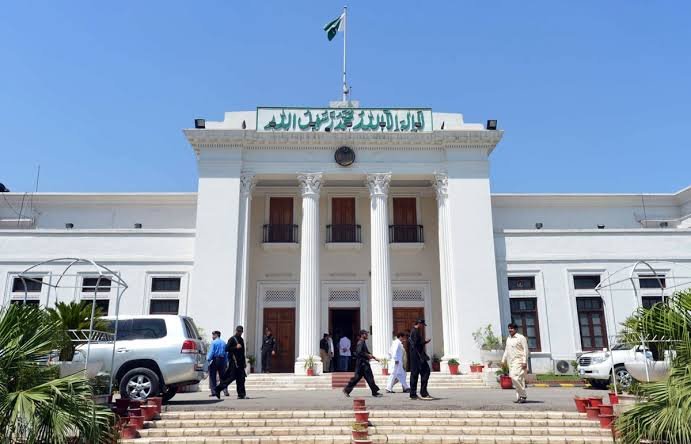
Mandatory Digital Payments Across Khyber-Pakhtunkhwa
Provincial Law Minister Aftab Alam introduced the digital payments bill in the assembly, establishing a comprehensive legal framework to transition Khyber-Pakhtunkhwa into a cashless economy. Under the newly approved law, all commercial entities, retail shops, educational institutions, clinics, and hospitals across the province are now required to facilitate electronic payments and prominently display QR codes at their premises.
To safeguard consumers, the legislation strictly prohibits businesses from imposing extra charges or surcharges on customers who choose digital payment methods. Establishments that refuse to accept digital payments will face monetary fines, with designated monitoring officers empowered to conduct unannounced inspections at commercial sites.
Key Provisions of the Digital Payment Act 2026
The legislation balances mandatory compliance with strategic incentives to encourage widespread adoption among small and medium enterprises (SMEs) and local service providers:
- Mandatory Infrastructure — All businesses, clinics, hospitals, and educational institutes must provide digital payment facilities and QR displays.
- No Surcharges & Fine Penalties — Merchants cannot add extra fees for digital transactions; non-compliance attracts legal penalties and fines.
- Two-Year Tax Relief — Newly registered enterprises adopting digital payments receive a two-year tax relief window.
- Technical Assistance Mandate — Commercial banks and digital payment service providers are required to provide setup and technical support to merchants.
Economic Transparency and Technical Integration
By compelling banks and digital payment service providers to extend technical infrastructure and assistance, the provincial government aims to bridge the gap between formal banking and small commercial vendors. Officials emphasize that bringing everyday retail transactions into the digital fold will curb undocumented cash flow, improve tax collection transparency, and accelerate financial inclusion statewide.
The Digital Payment Act 2026 at a Glance
A summary of the core mandates established by the newly passed legislation:
- Mandatory QR code displays and digital payment options across all shops and service centres
- Strict prohibition of additional customer fees on electronic transactions
- Two-year tax incentives for newly registered commercial entities
- Empowered monitoring officers for on-site business inspections
- Mandatory technical support from financial institutions and payment service providers
Assembly Session Turns Chaotic Over Quorum and Protests
The passage of the bill occurred alongside high political tension in the house. During a debate regarding the health and detention of PTI founder Imran Khan, government member Sajjad Barkwal spoke on Khan's condition, stating he had been moved back to Adiala Jail following a medical evaluation.
The proceedings escalated when PML-N lawmaker Sobia Shahid pointed out a lack of quorum and displayed a paper showing a blood pressure reading of 120/80. The gesture sparked intense chanting and counter-protests from government benches. Tensions mounted further over alleged inappropriate remarks, leading women lawmakers to demand a formal apology.
Suspension of Lawmaker and Assembly Adjournment
Although quorum was restored following a brief recess, continued disruptions led Deputy Speaker Suraiya Bibi to issue multiple warnings before invoking Rule 227 to suspend Sobia Shahid for two weeks. Despite orders for security personnel to escort her out, Shahid remained in the chamber, contending that the initial absence of quorum rendered the ruling invalid.
ANP Parliamentary Leader Arbab Usman expressed concern over poor government attendance, while JUI member Adnan Khan advocated for adherence to assembly rules. Law Minister Aftab Alam defended the chair's decision, emphasizing that orderly conduct must be enforced. Deputy Speaker Suraiya Bibi ultimately sustained the two-week suspension and adjourned the session until August 24.
Implications for Microfinance and Shariah-Compliant Fintech
The provincial mandate for digital payment adoption offers a substantial boost for Islamic microfinance institutions like FIMCL. As small business owners, micro-entrepreneurs, and retail vendors adapt to electronic payments and QR-based commerce, Shariah-compliant digital financing solutions will play a pivotal role in helping merchants acquire digital POS infrastructure, manage working capital, and participate seamlessly in Khyber-Pakhtunkhwa's evolving cashless economy.